Taking life-saving intensive care to children worldwide
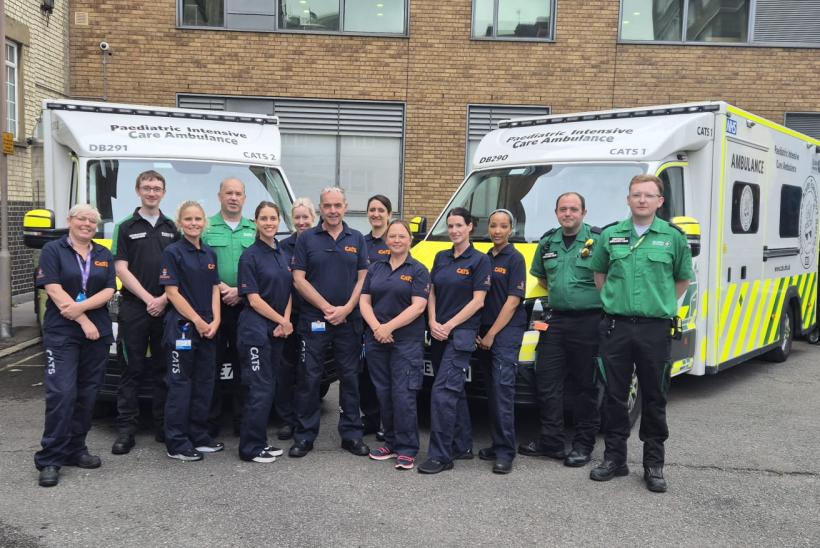
More than 20,000 times, a specialist children’s transport team has been called into action. They have travelled across the UK and to hospitals on most continents of the world to deliver life-saving intensive care to critically ill children.
This level of activity underpins a major milestone. The Children’s Acute Transport Service (CATS) has now reached its 50,000th referral, marking a defining moment for one of the UK’s most specialised paediatric critical care transport services.
Hosted by Great Ormond Street Hospital for Children, CATS operates around the clock. The service provides immediate access to expert advice and specialist treatment for babies, children and young people whose conditions are too complex to be managed in their local hospital. When needed, the team brings the skills and equipment of a paediatric intensive care unit directly to the child’s bedside.
Each CATS vehicle, whether travelling by road, helicopter or plane, functions as a mobile intensive care unit. It carries the equipment required to deliver advanced interventions, including ventilators, an ultrasound machine and surgical equipment. This ensures critically ill children receive specialist care throughout transfer.
Each year, the service moves around 1,200 children and young people across the UK by land ambulance and helicopter. Although based in London and supporting the North Thames region, the team also supports international transfers. Children who require highly specialised care are escorted via air ambulances and commercial aircraft.
A milestone reflected in Tillie's Journey
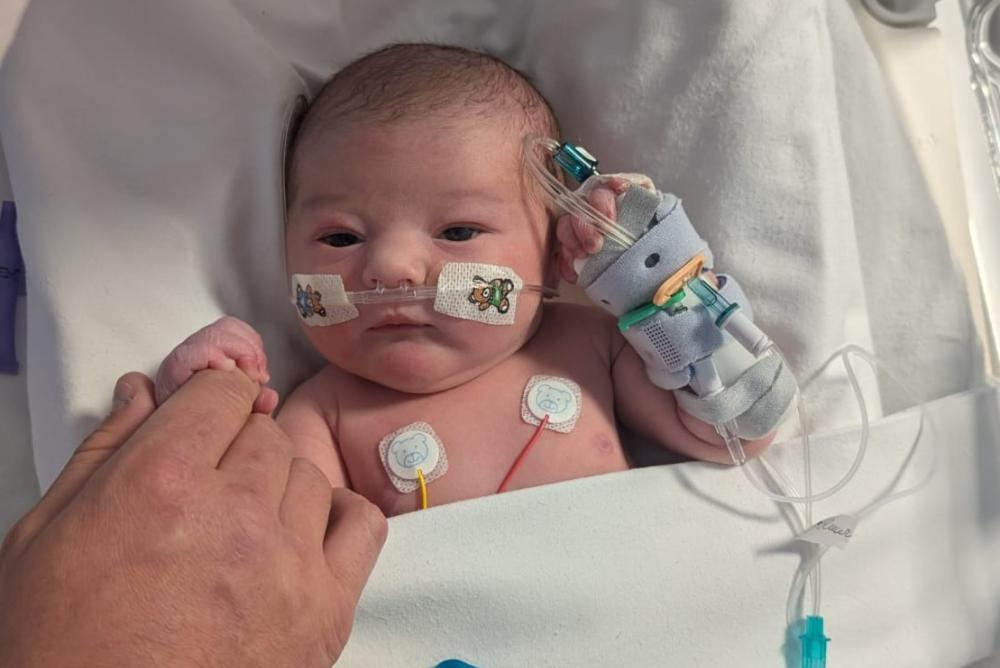
The service’s 50,000th referral was six-month-old Matilda Rose Stephanie Dunbar-Coppard, known as Tillie.
A few days before Tillie was due to be born, her parents, Amy Dunbar and Jacob Edward Coppard, went to their local hospital in Exeter after noticing a reduction in her movements. A scan revealed that Tillie had Vein of Galen Malformation (VGM). This rare condition is caused by abnormal connections between blood vessels in the brain during pregnancy.
VGM affects only 12 to 15 children in the UK each year. If left untreated, it can be life-threatening. The heart must work excessively hard to maintain blood flow to the brain.
Immediately following the scan, Amy and Jacob were transferred by blue-light ambulance to University College London Hospitals. Amy underwent an emergency caesarean section. As soon as Tillie was born, the CATS team were present. They prepared a specialist incubator so she could be transferred safely to GOSH, one of the few hospitals in the country able to treat this rare condition.
Jacob recalls the moment clearly.
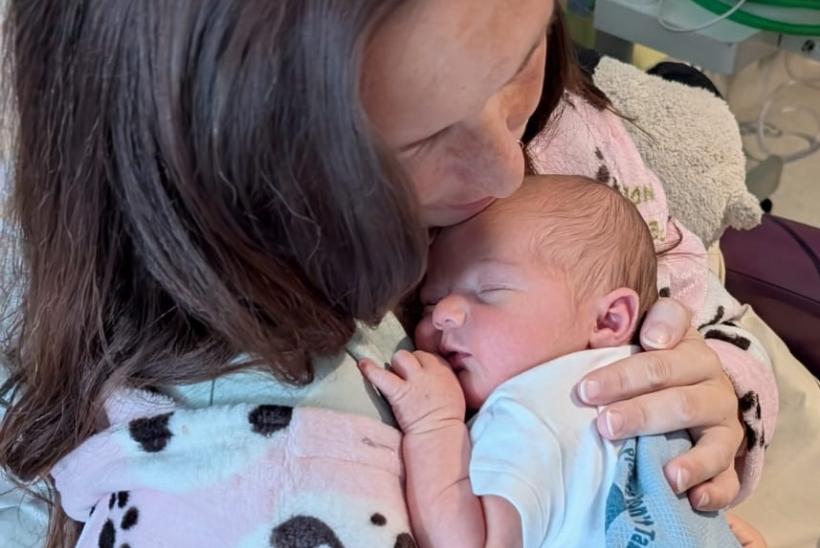
“The CATS team were amazing. They let Amy hold Tillie before she was moved to GOSH, and gave Tillie a little gift bag with a teddy. They even showed me how to change a nappy, as I’d never changed one before.
“They were reassuring, graceful and cautious during the transfer. I hadn’t shown any emotion until I got to GOSH. When I saw 10 clinicians waiting for Tillie, I had a little cry. One of the CATS team gave me a hug and told me it would be okay.”
After recovering from surgery, Amy joined Tillie and Jacob at GOSH.
“We went for our scan in Exeter and weren’t home again for another two weeks,” she said. “Tillie spent her first weeks at GOSH and was monitored until she was three months old and big enough for surgery.”
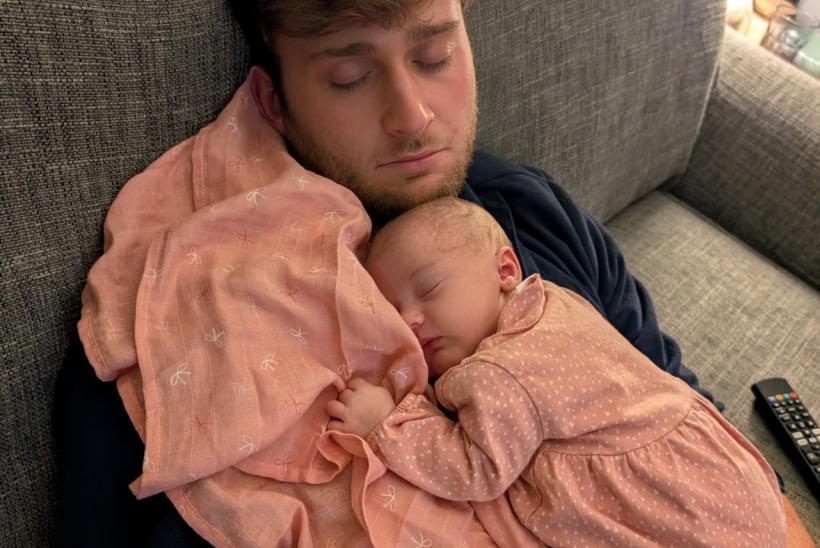
Following successful surgery in October, Tillie was able to spend her first Christmas at home in Okehampton. She was joined by her older brothers Leo, aged 11, and Lewi, aged nine, along with the family’s three dogs.
“Tillie’s doing amazing,” Jacob said. “She’s feeding well and is so calm.
It’s fantastic to have been the team’s 50,000th referral. We feel very special.”
Advancing paediatric critical care beyond borders
Now in its 24th year, CATS transports the highest number of seriously ill children in the UK. The service supports hospitals across the country and internationally, drawing on more than two decades of specialist transport experience.
Mark Clement, Operational, Nursing and Advanced Practice Lead for CATS, said the milestone reflects the collective expertise behind every transfer.
“Reaching 50,000 referrals is a huge achievement for our service. It reflects the collaborative input of nurses, doctors, ambulance technicians and administrators. Together, they ensure colleagues have immediate access to advice and treatment for ill and injured children.
“We are proud to be forerunners in paediatric critical care transport. Our team has led research and innovation that has helped shape the speciality worldwide.”
Supported through NHS specialist commissioning and with additional support from Great Ormond Street Hospital Charity, the CATS team continues to play a critical role in ensuring that the most vulnerable children can access the care they need, wherever that journey begins.

